Locksmith Guides15 min read
Best Types of Locks for Business Security in 2025

By Roadrunner Lock and Key ·
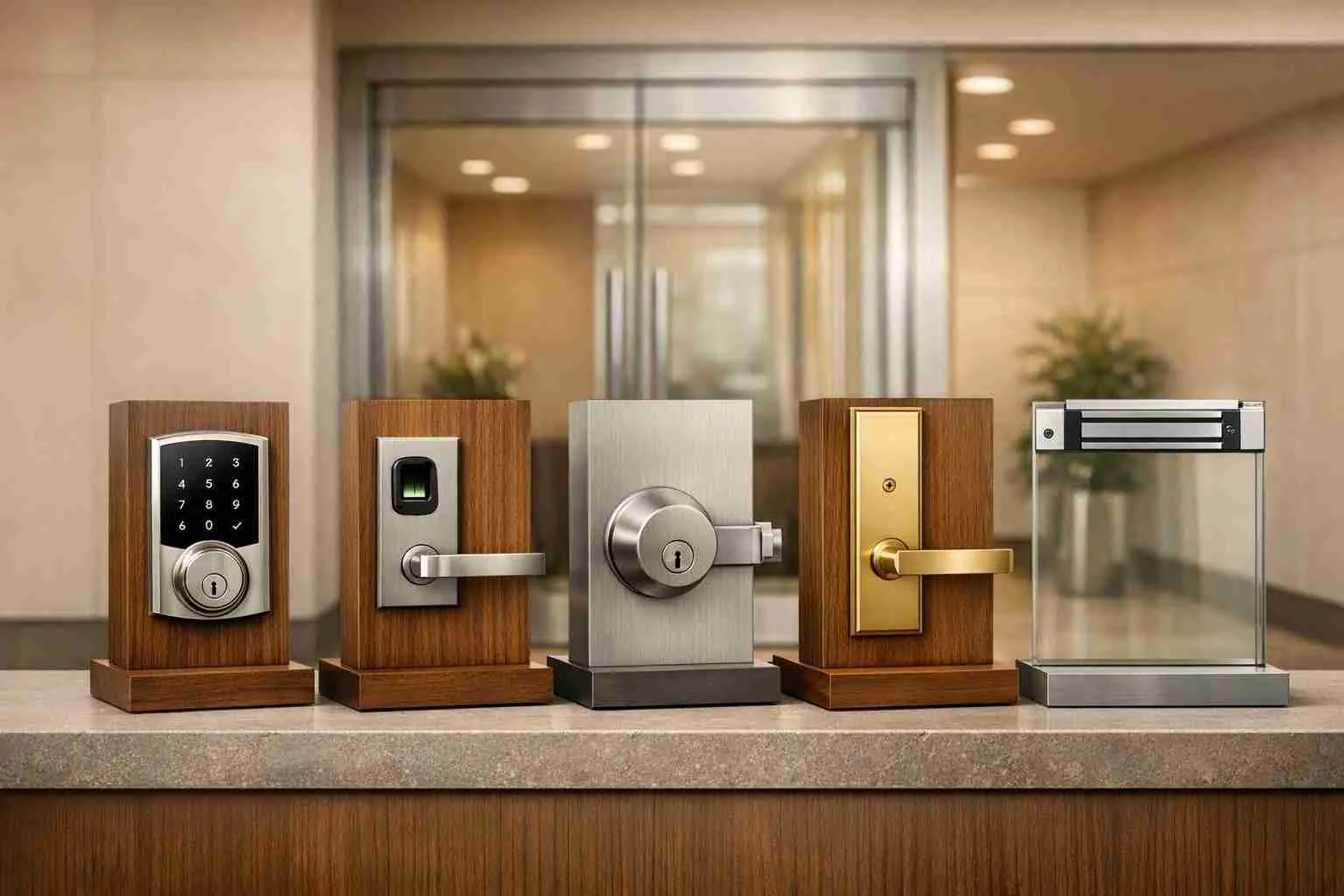
Securing your business in 2025 requires more than just a basic lock. Modern threats demand advanced solutions that combine physical and digital security. Here’s a quick rundown of the most effective commercial locks available:
- Smart Locks: Offer keyless entry with PINs, fobs, or smartphones. Ideal for offices, retail spaces, and leased properties.
- Biometric Systems: Use fingerprints or other unique traits for high-security areas like data centers or labs.
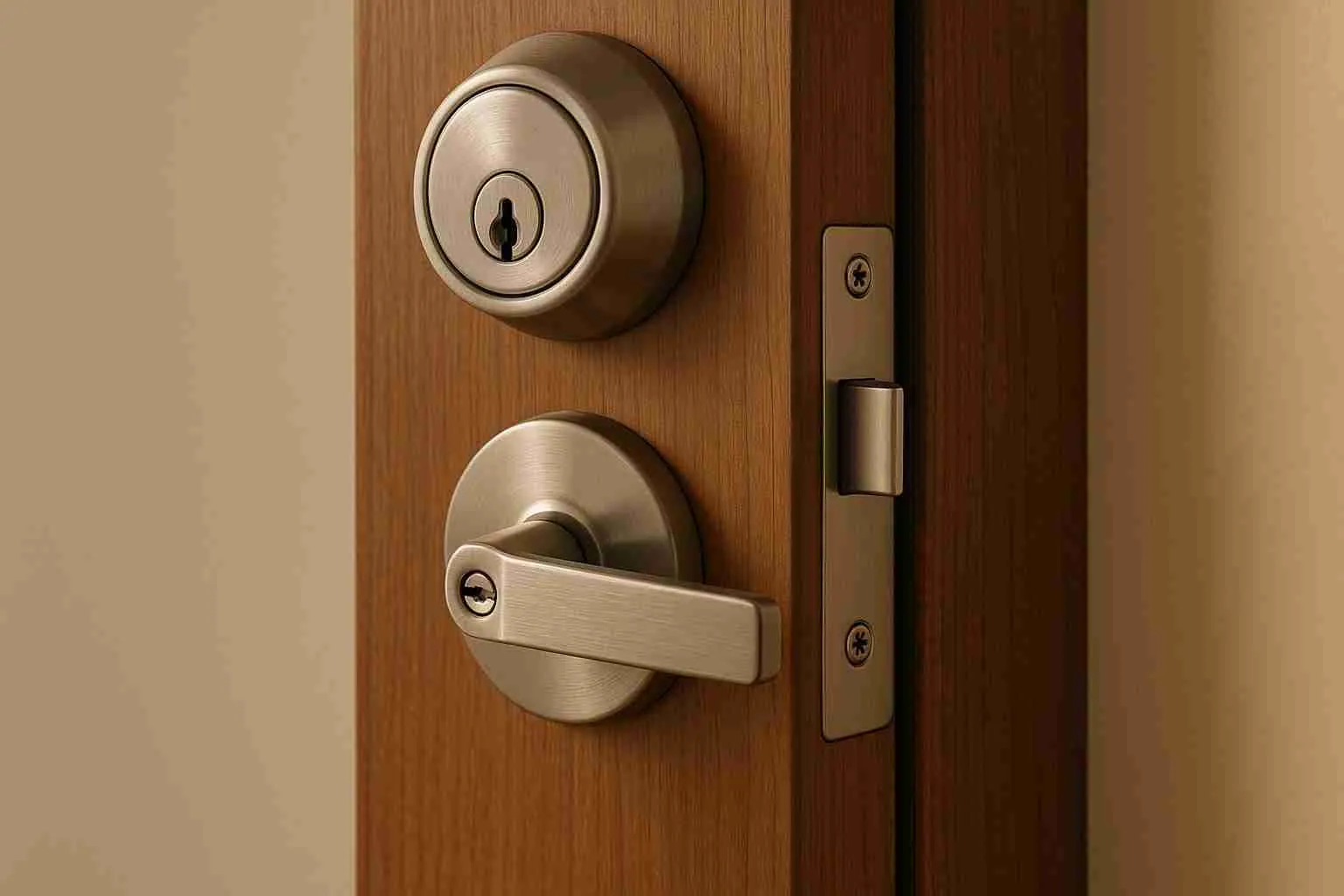
- High-Security Deadbolts: Provide strong physical protection against forced entry. Great for storefronts and storage rooms.
- Cylindrical and Mortise Locks: Durable, heavy-duty options for high-traffic areas like schools or hospitals.
- Electronic & Magnetic Locks: Advanced access control for glass doors, server rooms, or emergency exits.
Each lock type meets ANSI/BHMA Grade 1 standards for durability and reliability, ensuring over 1,000,000 usage cycles. The right choice depends on your business’s specific needs, traffic levels, and security priorities.
6 Commercial Smart Locks Every Business Manager Should Know About
1. Smart Locks (e.g., Yale nexTouch, Alarm Lock Trilogy DL2700)
Smart locks have become a cornerstone of modern business security, offering advanced access control through PIN codes, proximity fobs, and smartphone credentials. The Yale nexTouch is particularly suited for small offices and multi-family properties, while the Alarm Lock Trilogy DL2700 is built to handle high-traffic exterior doors, thanks to its durable, weather-resistant design.
Security Features
The Yale nexTouch can store up to 500 PIN codes and integrates seamlessly with Yale Accentra, allowing synchronized operation of both the latch bolt and deadbolt to comply with accessibility standards. The Alarm Lock Trilogy provides multiple access options, including keypad entry, proximity fobs, and one-time service codes for temporary use. Both locks carry an ANSI/BHMA Grade 1 rating, which ensures they can endure over 1,000,000 usage cycles.
Installation Requirements
Most smart locks are designed to fit standard 2-1/8" door preparations, making them easy to retrofit. Businesses can choose between Wi-Fi-enabled models for real-time updates (dependent on network reliability) and Bluetooth models that operate offline by using a smartphone as a bridge. Battery-powered options typically last 1 to 3 years, though high-traffic doors may benefit from hardwired power for continuous operation. Many models also feature external 9V battery jumpstart points to prevent lockouts if internal batteries fail [9,10].
Maintenance Needs
Smart locks often provide low-battery alerts about five weeks before the batteries are critically low. To ensure consistent performance, batteries should be replaced every 6 to 12 months, and firmware updates applied as needed. The Alarm Lock Trilogy's weatherproof design eliminates the need for additional protective coverings, reducing maintenance for outdoor installations. These thoughtful features make smart locks a dependable choice for various business environments.
Ideal Business Applications
Small offices with fewer than 10 employees can take advantage of cloud-based management without requiring extensive Wi-Fi infrastructure [7,8]. Retail stores and co-working spaces benefit from the ability to revoke access codes instantly, avoiding the cost of rekeying. Medical offices and research labs can use these locks to secure restricted areas while maintaining detailed access logs. For businesses in leased spaces, some smart locks are designed to fit over existing deadbolts without altering the exterior hardware, ensuring compatibility with a landlord's master key.
2. Biometric Systems (e.g., Aqara U100/U200, Medeco XT)
Biometric systems rely on unique physical traits, like fingerprints, facial features, or retina scans, to verify identity before granting access. The Aqara U100, for instance, uses advanced 3D fingerprint recognition, capturing depth and contour details to minimize spoofing risks. On the other hand, the Medeco XT combines biometric verification with a secure mechanical backup, ensuring a physical key option is always available.
Security Features
Modern biometric locks are designed with robust security in mind. They use AES encryption to secure data communication between the lock and management systems. For example, the Aqara U100 provides tamper alerts and keeps detailed audit logs of access attempts. Many systems also offer multi-factor authentication, pairing biometric scans with PIN codes or mobile credentials for added protection. Some models even integrate with IP security cameras, triggering recordings during biometric scans for enhanced monitoring. Additionally, businesses can customize settings for specific needs, such as fail-safe (unlocking during power outages) for high-traffic areas or fail-secure (remaining locked) for sensitive spaces like server rooms.
Installation Requirements
Biometric locks, including the Aqara series, are often designed for easy retrofit installation, fitting standard commercial doors with basic tools. However, more complex systems, especially those requiring network integration, might need professional installation, which can cost over $1,000 per door depending on wiring requirements. Most models run on batteries lasting six to twelve months, though high-traffic doors may benefit from hardwiring. The Aqara U100 even includes a USB-C emergency power port, preventing lockouts in case of unexpected battery failure. Regular maintenance is essential to keep these systems functioning smoothly post-installation.
Maintenance Needs
Consistent upkeep is essential for biometric systems. Sensors should be cleaned regularly to avoid dirt interfering with scans. Batteries should be replaced every six months in high-use areas and annually elsewhere. Firmware updates are equally important and should be applied every three months to address potential vulnerabilities. Unlike traditional locks, biometric systems eliminate the need for rekeying when credentials are compromised. Instead, access can be revoked instantly through cloud-based management platforms, reducing ongoing maintenance costs.
Ideal Business Applications
These systems are particularly well-suited for environments requiring high security and efficient access management. Data centers and research labs benefit from the non-transferable nature of biometric credentials, which prevents unauthorized sharing. Medical offices use these systems to secure patient records and meet HIPAA requirements, thanks to encrypted data storage and detailed access logs. Gyms, tech companies, and co-working spaces also find these locks practical for managing large user groups without the hassle of physical keys. Financial institutions often enhance security with multi-factor authentication, combining biometric scans with PIN codes for an extra layer of protection.
3. High-Security Deadbolts (e.g., Mul-T-Lock Hercular, Medeco M3, Adams Rite MS1850S)
While smart and biometric locks bring cutting-edge digital solutions, high-security deadbolts remain a reliable mechanical choice. These locks are the backbone of commercial security, delivering strong physical protection without the steep cost of full electronic systems. Models like the Mul-T-Lock Hercular, Medeco M3, and Adams Rite MS1850S are crafted from durable materials, designed to resist unauthorized access. They incorporate advanced features such as triple locking mechanisms, rotating disks, and anti-drill plates to stand up against picking, drilling, bumping, and prying. Just having a deadbolt installed can cut the risk of break-ins by 50%.
Security Features
These deadbolts come with patented key control systems, ensuring that keys can't be duplicated without proper authorization. They meet ANSI/BHMA Grade 1 standards, the highest rating for durability and strength. The solid metal bolts extend deep into the door frame, making them far more resistant to forced entry than spring-latch locks, which can be easily bypassed with basic tools. For doors with glass panes, double-cylinder models add extra security by requiring a key on both sides, though businesses should weigh this against emergency exit needs.
Cost-Effectiveness
While the upfront cost is higher, these locks pay off over time through their durability and minimal maintenance needs. They don’t rely on batteries, software updates, or network connections, which keeps long-term expenses low compared to smart locks. Businesses may also save on insurance premiums and avoid costly security breaches, adding to their overall value. Additionally, patented keyways reduce the need for frequent rekeying, a common issue during employee turnover.
Installation Requirements
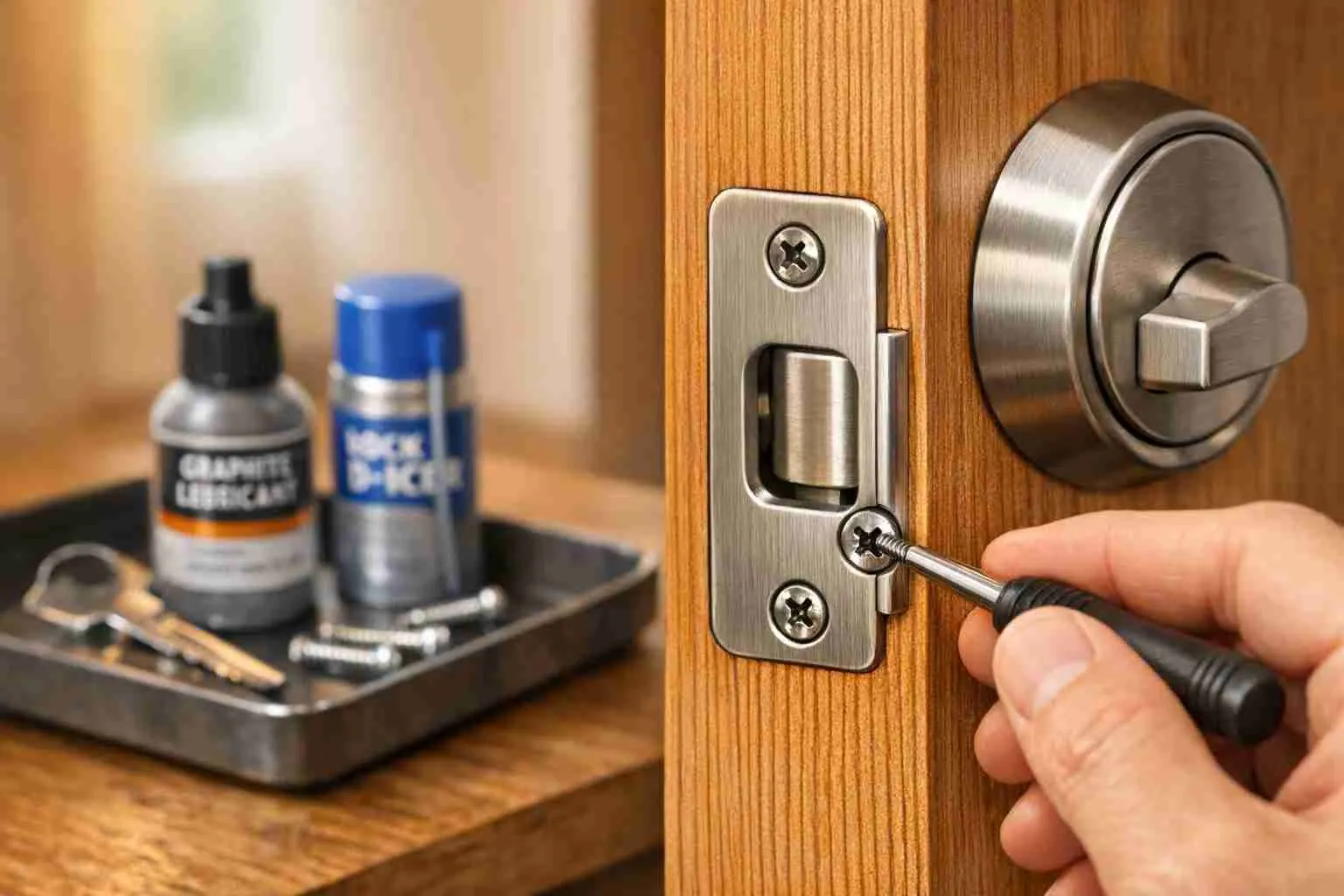
Proper installation is crucial for these locks to perform effectively. Professional installers ensure the bolt and strike plates are aligned correctly. Most commercial doors require a 2-3/4" backset and a standard 2-1/8" bore. Many high-security deadbolts are designed for easy retrofitting, simplifying upgrades to existing doors. For hollow metal doors, installers use internal spacers or anti-collapse sleeves to prevent damage when tightening cylinder screws. Reinforced strike plates should be secured with screws at least 3 inches long to anchor firmly into the door frame.
Maintenance Needs
These locks are low-maintenance, requiring only quarterly graphite lubrication and periodic inspections. Routine checks should include inspecting for wear, testing the bolt’s smooth operation, and verifying alignment to ensure continued reliability.
Ideal Business Applications
High-security deadbolts are perfect for exterior doors, storage rooms with valuable assets, and locations needing top-tier protection, such as schools, hospitals, and financial institutions. The Mul-T-Lock Hercular is a great choice for retail stores and storage areas, while the Adams Rite MS1850S is tailored for glass storefront doors with aluminum frames. These locks operate in a fail-secure mode without requiring power, making them ideal for remote entry points or places where electronic systems aren't practical. Up next, we’ll take a closer look at cylindrical and mortise locks, which offer additional solutions for everyday commercial needs.
4. Cylindrical and Mortise Locks (e.g., Schlage ND Series, Yale 8800 Series, Corbin Russwin CL3351)
Cylindrical and mortise locks provide reliable physical security solutions for commercial spaces, complementing the high-tech options like smart and biometric systems discussed earlier. These locks are designed to handle varying levels of traffic and security needs effectively. Mortise locks are heavy-duty systems installed in a rectangular pocket within the door, combining the handle, latch, and deadbolt into one unit. On the other hand, cylindrical locks are more common due to their simpler installation process, requiring only a circular borehole in the door face. For instance, the Yale 8800 Series is a trusted choice for schools and government buildings, while the Schlage ND Series is favored for its ease of installation and "Vandlgard" technology, which protects against lever damage from forced entry.
Security Features
Both cylindrical and mortise locks meet ANSI/BHMA Grade 1 standards, ensuring top-tier security. Mortise locks, with their embedded design, are particularly resistant to brute force as the lock's body distributes impact over a larger area. The Corbin Russwin CL3351, for example, is engineered for high-traffic environments like healthcare facilities and schools, offering vandal-resistant levers and dependable performance. Additionally, many locks in this category can be equipped with interchangeable cores (IC), enabling quick key changes without dismantling the lock, a practical feature for places with frequent staff turnover.
Installation Requirements
The installation process varies significantly between these two lock types. Cylindrical locks are easier to install, requiring only a standard 2-1/8" borehole drilled through the door face. Mortise locks, however, involve cutting a rectangular pocket into the door edge, which requires specialized tools like a plunge router and jigs. This complexity makes professional installation highly recommended to ensure proper alignment and durability. Additionally, it’s crucial to confirm the door’s backset, either 2-1/2" or 2-3/4", to avoid costly adjustments. Upgrading from a cylindrical to a mortise lock involves more extensive modifications, including replacing the borehole and creating a new pocket.
Maintenance Needs
Mortise locks stand out for their ability to be repaired or re-keyed without replacing the entire unit. Regular maintenance is essential to keep these locks functioning smoothly. Annual upkeep should include tightening set screws and lubricating the internal mechanisms with products recommended by the manufacturer. In high-traffic areas, quarterly inspections can help catch wear and tear early, preventing bigger issues down the line.
Ideal Business Applications
Choosing between cylindrical and mortise locks depends on the specific needs of your business. Mortise locks are best suited for main entry points, storefronts, and other high-traffic areas like hospitals or schools, where durability is critical. As National Lock Supply explains:
"If you're a homeowner or business owner who wants the kind of 'shut the door and forget about it' security that lasts for decades, mortise locks are still the gold standard in 2025".
Cylindrical locks, on the other hand, are a practical choice for interior spaces such as offices, restrooms, and break rooms. They help minimize installation time and costs while still providing reliable security. This distinction between lock types naturally leads to the next topic: the role of electronic and magnetic locks in modern commercial security systems.
5. Electronic and Magnetic Locks (e.g., ASSA ABLOY Sargent 10 Line, Best Access SFIC)
Electronic and magnetic locks have taken business security to the next level by integrating digital controls and advanced access management. These locks use electromagnetic force or electric strikes to secure doors, offering enhanced precision and control. The global access control market is projected to hit $10.8 billion by 2024, with commercial buildings making up over 45% of a $3.8 billion segment by 2025. Magnetic locks can deliver holding forces between 600 lbs and 1,800 lbs, while electric strikes replace traditional strike plates, releasing mechanically when activated.
Security Features
Electronic locks bring a level of accountability that traditional keys can't match. They create audit trails, recording every entry attempt. For instance, the Sargent IN120 can log up to 10,000 events and includes Wi‑Fi connectivity with HID OMNIKEY SE for mobile credentials and multi-factor authentication. These systems are fortified with high-level encryption and detailed logs to tighten security.
The Best Access SFIC (Small Format Interchangeable Core) is another standout. It allows facility managers to swap lock cores instantly without removing hardware, making rekeying quick and efficient, especially in workplaces with frequent staff changes. This ability to rapidly update security measures is a game-changer for dynamic environments. However, these advanced systems demand proper installation to function at their best.
Installation Requirements
Unlike their mechanical counterparts, electronic locks need low-voltage wiring (12VDC or 24VDC), dedicated power supplies, and often a battery backup to maintain security during power outages. Magnetic locks are surface-mounted on door headers and frames, making them a practical choice for glass or aluminum doors where traditional installations fall short.
Electric strikes, which replace standard strike plates, can be set to "fail-secure" (locked without power) or "fail-safe" (unlocked without power) configurations. Maglocks, being inherently fail-safe, must be paired with Request-to-Exit sensors or motion detectors to comply with NFPA 101 and IBC fire codes. Many installations now use Power over Ethernet (PoE+) to simplify retrofits by delivering both power and data through a single cable. Proper installation is critical to unlocking the full potential of these advanced systems.
Maintenance Needs
To stay secure, electronic locks require regular firmware updates to protect against cyber threats and periodic battery checks for wireless models. Magnetic locks need quarterly cleaning to maintain their contact surfaces, while electric strikes benefit from annual lubrication of their mechanical parts. Using 18-gauge wire for cable runs up to 100 feet helps prevent voltage drops. Grade 1 locks, tested for hundreds of thousands of cycles, ensure durability in high-traffic areas.
Ideal Business Applications
Electric strikes are ideal for high-traffic perimeter doors in places like schools, hospitals, and offices. They offer mechanical key overrides and typically comply with fire safety codes more easily. Magnetic locks, on the other hand, shine in settings like glass storefronts, server rooms, and laboratories. Their sleek design and holding force of up to 1,800 lbs deliver both security and aesthetic appeal.
As Pipl Systems puts it:
"Commercial smart locks are a quick and easy-to-implement security solution for doors with no pulled wires".
For businesses with frequent employee turnover, keypad and RFID systems are a smart choice. They let managers update access codes or revoke digital keys instantly, eliminating the cost and hassle of rekeying.
Pros and Cons Comparison
Commercial Lock Types Comparison: Features, Costs, and Best Applications
Choosing the right lock is all about balancing security needs with cost and practicality. Every lock type comes with its own perks and challenges, which can influence your decision based on your specific requirements.
Smart locks are great for eliminating the hassle of physical keys and offer detailed access logs, making them perfect for small offices or rental properties. But keep in mind, they rely on batteries, which need replacing every 6 months to 3 years. Wi-Fi models tend to drain batteries faster than Bluetooth ones.
Biometric systems stand out for their advanced identity verification, using features like fingerprints or iris scans that are almost impossible to fake. The downside? They come with a higher upfront cost and require regular cleaning and calibration to stay reliable.
High-security deadbolts are a solid choice for resisting brute force attacks. They’re reasonably priced and need minimal upkeep, just some lubrication every few months. These locks work well for retail shops or storage spaces where physical security is key.
Cylindrical and mortise locks are built to last, with Grade 1 models designed to handle over a million cycles. While cylindrical locks are easier to install, mortise locks demand professional installation due to their more complex setup. They’re a durable option for high-traffic areas like schools and hospitals.
Electronic and magnetic locks are known for their strong holding power, up to 1,800 lbs, and have few moving parts, making maintenance simple. However, they need low-voltage wiring and backup power to function during outages. Magnetic locks, in particular, are fail-safe, meaning they unlock without power, which is a fire code requirement for emergency exits. But this feature may not suit areas that need to stay locked during a power failure.
To help you compare, here’s a quick breakdown:
| Lock Type | Primary Strength | Cost Range | Installation Complexity | Maintenance Frequency | Best For |
|---|---|---|---|---|---|
| Smart Locks | Remote access & audit trails | $100 to $300 | Easy to Moderate | Battery changes (6 to 36 months) | Small offices, co-working spaces |
| Biometric Systems | Advanced identity verification | $295+ | Moderate to Complex | Sensor cleaning (quarterly) | Data centers, labs, banks |
| High-Security Deadbolts | Brute-force resistance | Moderate | Easy | Lubrication (quarterly) | Retail storefronts, storage units |
| Cylindrical/Mortise Locks | Exceptional durability | Moderate, High | Professional installation | Low (annual inspection) | Schools, hospitals, high-traffic areas |
| Electronic/Magnetic Locks | Strong holding force | Moderate | Complex (wiring required) | Low (periodic updates) | Glass doors, server rooms, lobbies |
This table provides a snapshot of each lock type, helping you weigh their strengths, costs, and maintenance needs against your security goals.
Conclusion
Choose locks that combine advanced security features with your specific needs. There's no one-size-fits-all solution, what works for a retail shop might not suit a hospital or a data center. Modern business security requires solutions tailored to unique environments.
Evaluate each option based on your security priorities. For high-security locations like banks, government offices, or data centers, biometric systems and high-security cylinder locks are reliable choices. In facilities where unauthorized access poses serious risks, investing in ANSI/BHMA Grade 1 hardware with advanced authentication technology is a must.
In high-traffic areas such as schools, hospitals, or office buildings, focus on ANSI/BHMA Grade 1 mortise or cylindrical locks, which are tested to endure over 1,000,000 operating cycles. Opt for models with a proven track record of durability.
For businesses that require flexible access management, like co-working spaces, gyms, or rental properties, smart locks and interchangeable core systems offer convenience. They minimize rekeying costs and provide detailed audit trails. As Jeremie from Pipl Systems explains:
"A smart lock gives you one place to decide who gets in, when they can come, and for how long".
Start by reviewing your security priorities and auditing all entry points. Different areas, whether it’s the front door, server room, or emergency exits, may need specific solutions. For instance, deadbolts enhance physical security, biometric locks secure restricted zones, and magnetic locks ensure fire code compliance. Align lock types with the risk levels of each area to create a practical, effective security system.
FAQs
Which lock type is best for each door in my business?
The type of lock you need depends on the door's purpose and how much security it requires. For exterior doors, high-security deadbolts like the Mul-T-Lock Hercular Deadbolt are a solid choice, they're built to last and resist tampering. When it comes to interior doors or restricted areas, electronic keypad locks or smart locks are ideal. These options allow for flexible access and even provide audit trails to track who enters. For glass storefronts, specialized locks such as Adams Rite deadlocks offer reliable security without compromising the integrity of the glass structure.
How do I choose fail-safe vs fail-secure for my doors?
When choosing between fail-safe and fail-secure locks, it all comes down to the door's function and safety priorities.
- Fail-safe locks automatically unlock when the power goes out. These are perfect for emergency exits or doors where people might need to leave quickly during a power failure. Think of stairwell exits or building evacuation routes.
- Fail-secure locks, on the other hand, remain locked without power. These are better suited for areas that require stronger protection, such as server rooms or storage spaces with sensitive materials.
In short, go with fail-safe locks for doors tied to evacuation needs, and opt for fail-secure locks for spaces that demand security, even in a blackout.
What happens if a smart or biometric lock loses power?
If a smart or biometric lock runs out of power, you might face temporary access issues. However, most locks are designed with backup solutions, such as physical keys or low-battery alerts, to ensure you’re not locked out. These safeguards help you maintain access and security, even when power problems arise.