Locksmith Guides12 min read
Deadbolt vs Regular Lock: Which Is More Secure

By Roadrunner Lock and Key ·
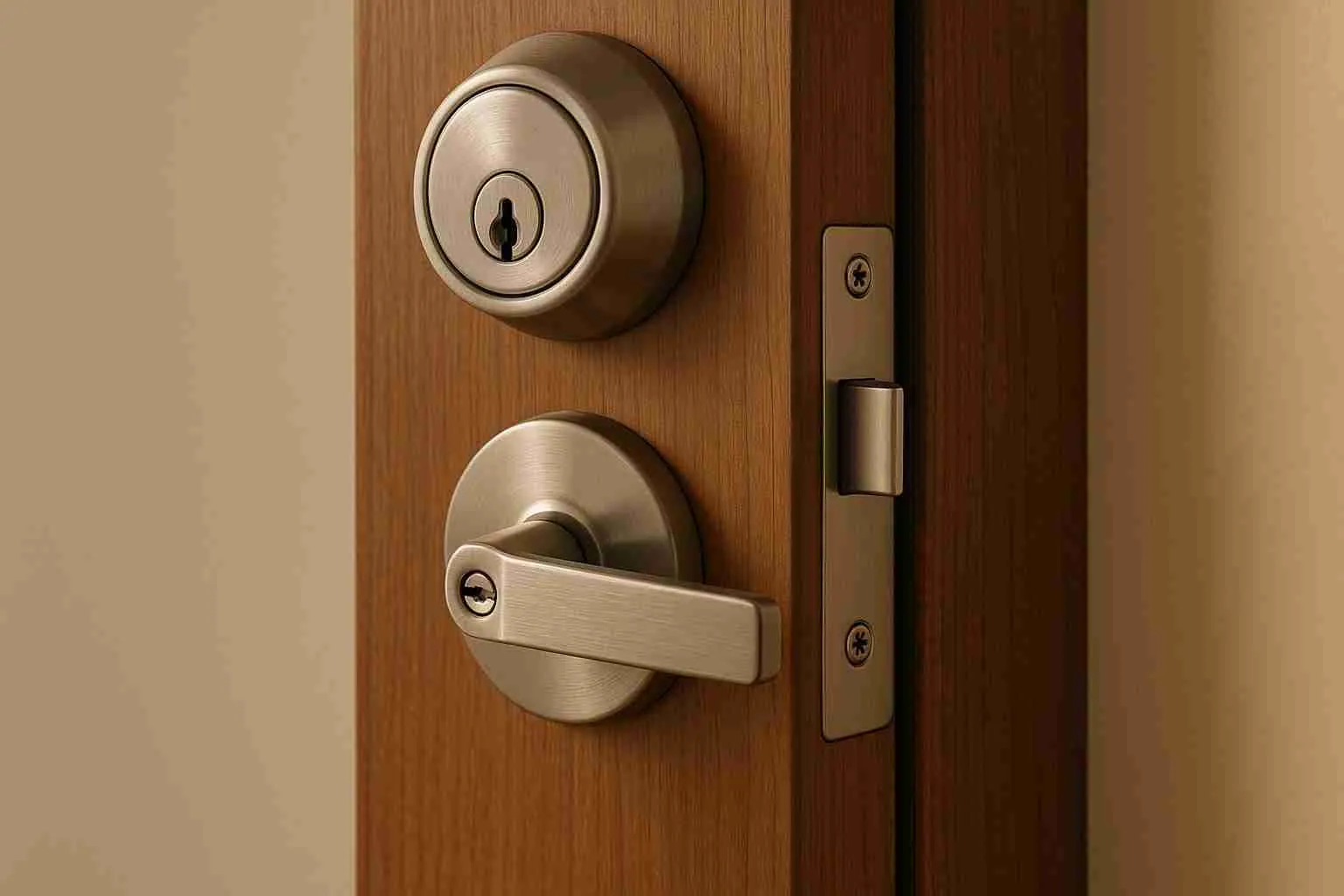
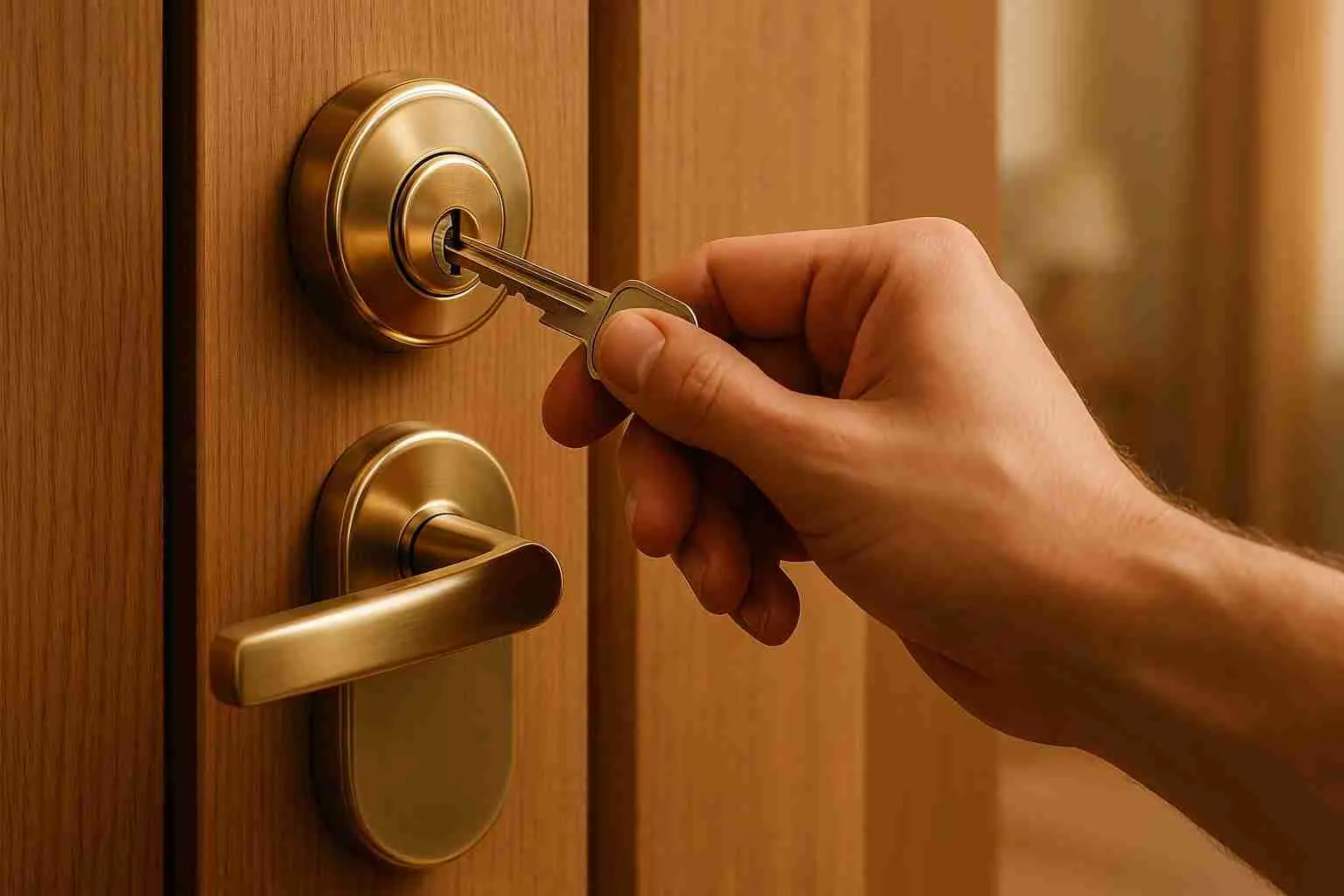
When it comes to securing your home, deadbolts offer far greater protection than regular locks. Regular locks, often found in doorknobs or levers, are convenient and affordable but provide only basic security. Deadbolts, with their solid metal bolts and robust design, are far more resistant to forced entry, lock-picking, and wear over time.
Key Differences:
- Regular Locks: Easy to install, affordable, and ideal for interior doors where privacy matters more than security. However, they’re vulnerable to picking, bumping, and physical force.
- Deadbolts: Built for strength, they’re essential for exterior doors. They resist tampering and forced entry, and high-security options include features like anti-pick pins and reinforced strike plates.
Quick Tip: For maximum security, pair a regular lock with a deadbolt on exterior doors. This combination balances convenience with strong defense.
| Feature | Regular Lock | Deadbolt |
|---|---|---|
| Security | Low; easy to pick or force open | High; resists picking and force |
| Durability | Prone to wear over time | Long-lasting with minimal upkeep |
| Cost | Budget-friendly ($10 to $45) | Higher ($25 to $300+) |
| Best Use | Interior doors | Exterior doors |
Choose based on your needs: regular locks for interior spaces, deadbolts for areas requiring stronger security. Pairing both on exterior doors ensures peace of mind.
What Is A Dead Bolt Lock? | GSL Discussion
What Are Regular Door Locks?
Regular door locks, often called spring bolt or latch locks, are among the most commonly used types of locks. These locks are typically integrated into doorknobs or lever handles and rely on a straightforward, spring-loaded mechanism. When the handle is turned, the spring retracts the latch, allowing the door to open.
You’ll often find these locks in residential interiors, such as bedrooms, bathrooms, hallways, and closets. They’re also frequently used on cabinets, drawers, mailboxes, and wardrobe doors, places where the primary goal is to ensure basic privacy rather than high-level security. In some cases, variations like wall-mounted locks are used for sliding doors or as additional security measures alongside more robust locking systems.
In commercial settings, lever handle locks with spring mechanisms are especially popular. They’re user-friendly and provide better accessibility for people with mobility challenges, including seniors and individuals with disabilities.
How Regular Locks Work
Here’s how a regular lock functions: when the door is closed, a spring-loaded latch extends into the strike plate on the door frame, securing the door in place. To open the door, turning the handle compresses the spring and retracts the latch, allowing the door to swing freely.
These locks don’t require a key to engage from the inside, simply closing the door activates the latch.
Main Features of Regular Locks
Regular locks are affordable, easy to install, and well-suited for interior spaces. They’re a practical choice for areas where quick access and basic privacy are priorities, such as bedrooms, bathrooms, or other high-traffic spaces. Their simple mechanism ensures convenience without the need for complex unlocking procedures.
However, the trade-off for this convenience is lower security. Regular locks are relatively easy to bypass using techniques like picking or bumping, and their spring mechanisms can weaken over time. They’re not designed to withstand significant force, so relying on them as the sole security measure for exterior doors or critical entry points isn’t advisable.
That said, pairing a regular lock with a deadbolt on an exterior door can create a solid combination. The regular lock provides ease of use for daily access, while the deadbolt adds the necessary strength to enhance security.
Next, we’ll take a closer look at how deadbolts differ in both design and the level of protection they offer.
What Are Deadbolt Locks?
Deadbolt locks are a reliable choice for securing your home or property. They use a solid bolt that extends deep into the door frame, providing a strong defense against forced entry. Unlike standard locks, which rely on spring mechanisms, deadbolts stay firmly in place until you manually unlock them with a key or thumb turn. This simple yet effective design makes them much harder to bypass.
How Deadbolts Work
Deadbolts operate through a straightforward mechanism. When you turn the key or thumb turn, the heavy bolt slides into the door frame, locking it securely. Unlike spring-based locks, deadbolts require deliberate action to engage or disengage, which significantly improves their resistance to tampering or break-ins. Up next, we'll explore the various types of deadbolts and the unique security benefits they offer.
Security Comparison: Regular Locks vs. Deadbolts
When it comes to safeguarding your home, understanding how regular locks and deadbolts hold up against potential threats is essential. Both types of locks face different challenges, from brute force to skilled manipulation. Here's a closer look at how they compare across key security factors.
Protection Against Forced Entry
Regular locks, often equipped with spring-loaded mechanisms, provide limited resistance to forced entry. Their latches are prone to giving way under pressure, making them vulnerable to physical attacks like kicks or prying with basic tools.
Deadbolts, however, are built with strength in mind. The solid metal bolt extends deep into the door frame, creating a robust connection that's challenging to breach without causing obvious damage. In most cases, attempts to bypass a deadbolt result in damage to the door itself rather than the lock mechanism.
Protection Against Picking and Manipulation
Standard locks, such as knob locks, spring bolt locks, and basic cylinder locks, are relatively easy targets for picking or bumping. Their design makes them susceptible to tampering with simple tools, often allowing intruders to bypass them without leaving clear signs of entry.
Deadbolts, by design, offer stronger resistance to these covert methods. Without a spring mechanism and with their solid metal construction, they are far more challenging to pick or bump. While no lock is completely immune to tampering, deadbolts typically demand significantly more time and skill to compromise, even for experienced intruders using advanced tools.
For even greater security, high-security deadbolts incorporate features like anti-pick pins and mechanisms to counter bump key attacks. Vertical deadbolts, also known as Jimmy-proof deadbolts, are particularly effective against bumping techniques. Many high-security models also include restricted key systems, which limit unauthorized duplication and add another layer of protection.
| Security Factor | Regular Door Lock | Deadbolt Door Lock |
|---|---|---|
| Resistance to Lock Picking & Bumping | Weak; easily picked or bumped with basic tools | Strong resistance; difficult to pick, bump, or force open |
| Mechanism Type | Spring-loaded latch, easily manipulated | Solid metal bolt without a spring mechanism, operated by a key or thumb turn |
| Anti-Manipulation Features | Minimal protection | High-security options include anti-pick pins, anti-bump mechanisms, and restricted key systems for added defense |
Durability and Maintenance
The lifespan and upkeep of your door lock can have a lasting impact on both your security and budget. Comparing the durability and maintenance needs of regular locks versus deadbolts can help you make a better-informed choice.
Long-Term Durability
Regular locks, such as knob locks or lever handle locks, tend to wear out faster due to their spring-loaded mechanisms. Over time, frequent use can lead to issues like loose handles, sticky latches, or even complete failure. These types of locks are particularly vulnerable because their moving parts endure constant stress.
Deadbolts, however, are designed to last. Made from sturdy materials like steel or brass, deadbolts rely on a solid metal bolt rather than a spring mechanism, reducing the likelihood of mechanical failure. As Vita Chernikhovska, Content Creator at Nassau National Cable, puts it:
Durability. Their solid construction makes them resistant to wear and tear.
High-security deadbolts take durability even further with features like hardened steel bolts, reinforced strike plates, and heavy-duty screws that can withstand drilling, picking, and physical attacks. The cylinders in top-tier deadbolts are often machined from steel with tight seals, making them even more resilient.
For the best in durability, Grade 1 deadbolts stand out. Tested to endure significant force, these locks provide long-lasting protection that can span decades. Look for deadbolts crafted from solid brass or steel to ensure maximum durability and security.
Now, let’s explore how maintenance plays a role in keeping these locks functional over time.
Maintenance Needs
Deadbolts not only excel in durability but also require less maintenance compared to regular locks. Regular locks, with their complex spring-loaded mechanisms, often need frequent adjustments, tightening, or part replacements. Even a single forced-entry attempt can compromise their functionality, leading to costly repairs or replacements.
Deadbolts, thanks to their simpler and more robust design, demand minimal upkeep. Aqara LLC highlights this advantage:
Unlike regular door locks, deadbolts do not rely on a spring mechanism, making them more resistant to forced entry and therefore acting as a more secure option.
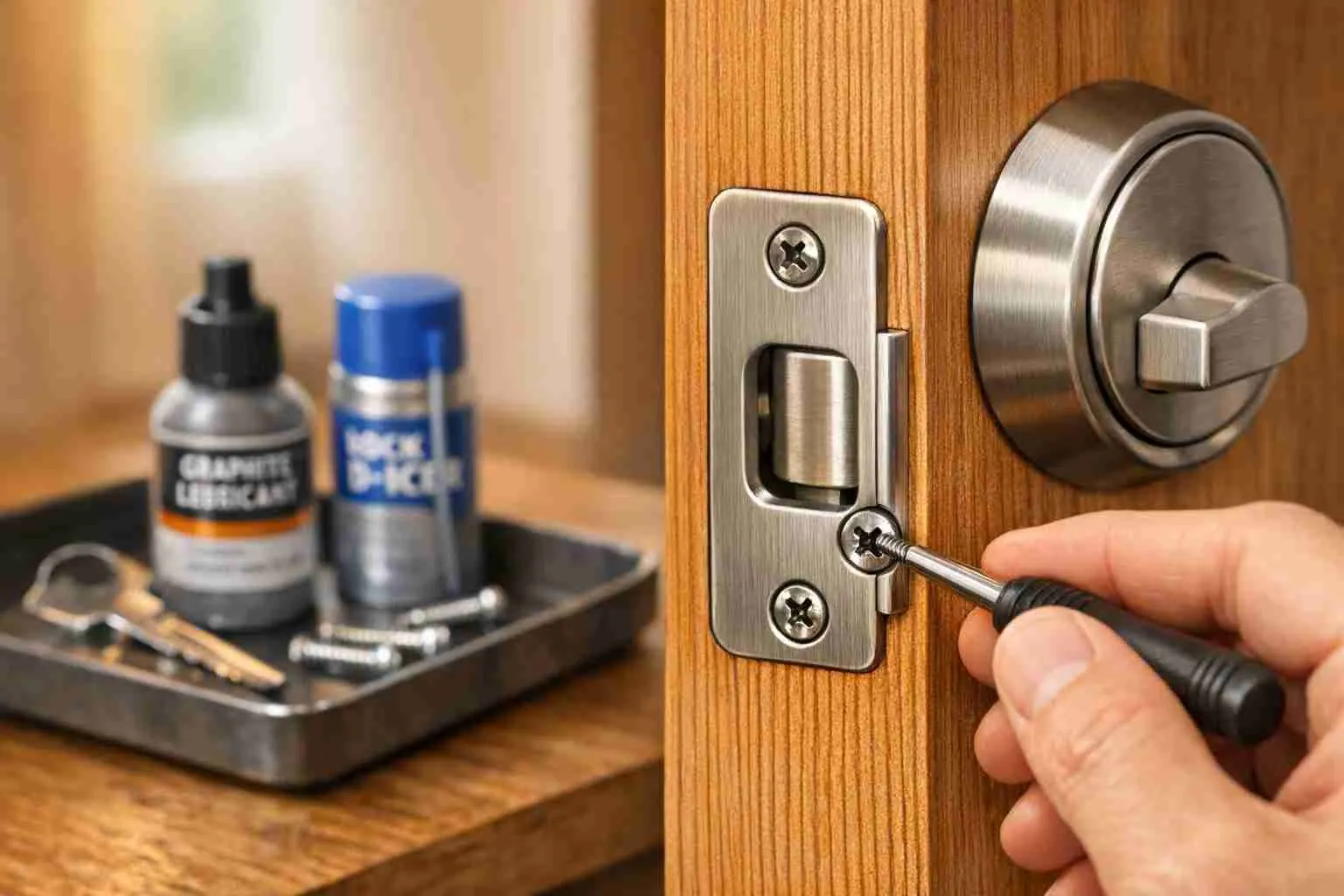
While extremely durable, deadbolts can occasionally require minor adjustments. For instance, shifts in the door frame caused by house settling might affect their alignment. Simple fixes, like adjusting the strike plate or realigning the door, are usually enough to restore smooth operation.
In contrast, regular locks are more prone to wear and tear from daily use and external forces, often requiring ongoing repairs or eventual replacement. Deadbolts, with their sturdy build, offer a more reliable and low-maintenance security solution that stands the test of time.
Cost and Installation Considerations
When choosing between regular locks and deadbolts, it’s important to weigh the cost and installation requirements against your security needs, budget, and skills. Both options come with varying price ranges and installation challenges that can impact your decision.
Installation Requirements
Regular locks, like knob locks or lever handle locks, are relatively simple to install. Their design is user-friendly, making them a good option for DIY enthusiasts. Most regular locks fit into standard pre-drilled door holes and require only basic tools, making the process straightforward for homeowners.
Deadbolts, on the other hand, require a higher level of precision during installation. Installing a deadbolt involves drilling specific holes for the lock and bolt, as well as creating a mortise in the door edge for the strike plate. While it’s possible to install a deadbolt yourself if you have the necessary tools and skills, the process is more complex. Mistakes during installation can reduce the lock’s effectiveness, which is why proper installation is so important. For vertical deadbolts, the process may involve even more extensive modifications to your door frame, adding to the complexity. If you’re unsure about your ability to handle the installation, hiring a professional can ensure the lock is installed correctly and functions as intended.
Ultimately, these installation needs can influence the overall cost of your project.
Price Comparison
Regular locks are usually the more budget-friendly option. Knob locks are often the least expensive, while lever handle locks tend to cost a bit more due to their design and functionality.
Deadbolts, however, come at a higher price point. Basic deadbolts range from $10 to $45, while standard models can cost anywhere from $25 to $300. High-security deadbolts, featuring elements like hardened steel bolts and pick-resistant cylinders, are priced higher because of their advanced materials and engineering. Biometric locks that incorporate deadbolt mechanisms are typically the most expensive option.
If you’re looking to save money, opting for DIY installation of a deadbolt can help reduce costs. However, investing in professional installation might be worth it to ensure the lock is properly installed and provides optimal security.
Striking a balance between your budget and security needs is essential. While a quality deadbolt may require a larger upfront investment, its durability and added protection can make it a worthwhile choice in the long run. Regular locks, though less expensive, may not provide the same level of security, so consider your priorities carefully when making your decision.
Which Lock Is Right for You?
Now that we've compared security and installation, let's figure out how to choose the best lock for your specific needs. The decision boils down to three main factors: where you'll install the lock, the level of security required, and how the lock will be used.
When to Use Regular Locks
Regular locks are ideal for interior doors where convenience is more important than high security. Think bedroom doors, bathrooms, or closets, places where privacy matters but heavy-duty protection isn't necessary. A simple knob or lever handle lock does the job without the added complexity of stronger mechanisms.
These locks also work well in areas with minimal valuables. For example, a guest bedroom or a storage room likely doesn’t need the same level of security as an exterior door. In office settings, regular locks are common for interior doors since they allow employees to move around quickly throughout the day. However, relying solely on regular locks for exterior doors or spaces containing valuables isn't a good idea. Their spring-loaded latch mechanisms are more susceptible to forced entry.
For areas that demand greater protection, it's worth considering another option.
When to Use Deadbolts
Deadbolts are a must for exterior doors and any access points that require stronger protection. Unlike regular locks, deadbolts feature a solid metal bolt that slides deep into the door frame, making them much harder to force open.
They’re especially important for high-value areas like home offices or safe rooms. If someone attempts to breach these spaces, a deadbolt adds an extra layer of defense that’s tough to bypass.
For maximum security, combining regular locks with deadbolts is the way to go. Pairing a knob lock with an independent deadbolt on exterior doors ensures that if one lock is compromised, the other remains intact.
Tyler Coad, Sales Leader at DraftLOCK Windows, emphasizes this point:
"An inside deadbolt lock provides extra security, especially when used in conjunction with a high-quality lock and installed properly".
If your door already has a knob lock, adding a deadbolt is usually straightforward. Deadbolts are typically installed above or below the existing lock, creating two separate locking points. The best part? You don’t have to remove the current lock, making this an easy and practical security upgrade.
For more complicated installations or unique door setups, it’s a good idea to consult a professional. They'll ensure everything is installed correctly and functions as it should.
Conclusion
When choosing locks, it’s all about understanding their strengths and matching them to your needs. Regular locks are great for interior doors where privacy is the priority and quick access is key. On the other hand, deadbolts, with their solid metal bolts, provide stronger resistance against forced entry, making them a must-have for exterior doors or areas where security is critical.
The smart move? Use both. Combining a regular lock for convenience with a deadbolt for added security creates a double layer of protection. Even if someone manages to bypass one, they’ll still face the challenge of the other.
Think about what you’re protecting and identify the vulnerable spots in your home. Regular locks work well in high-traffic areas, while deadbolts are better suited for entry points and spaces where valuables are stored. Matching the lock type to the level of risk ensures better security and peace of mind.
FAQs
What makes a deadbolt more secure than a regular lock for exterior doors?
Deadbolts offer stronger security against forced entry compared to standard locks like latches or spring bolts. Their design includes a solid steel bolt that extends deep into the doorframe, making it significantly tougher for intruders to force their way in using physical strength.
On top of that, deadbolts are built to be long-lasting and dependable. They resist tampering more effectively and can handle greater physical wear, making them a smart option for protecting exterior doors in both homes and businesses.
What’s the best way to install a deadbolt for maximum security?
To get the most out of your deadbolt's security, proper installation is key. Ensure the bolt extends completely into the door frame, and use long screws, at least 3 inches, to secure the strike plate firmly into the wall stud. This adds extra resistance against forced entry attempts.
Also, double-check that the lock lines up perfectly with the strike plate and that the door sits tightly in the frame without any noticeable gaps. If you're not confident about the installation process, reaching out to a professional locksmith can help ensure everything is set up correctly.
What types of deadbolts provide better protection against lock-picking and forced entry?
Certain high-security deadbolts are built to stand up against lock-picking and forced entry. These locks often come with features like hardened steel bolts, anti-drill plates, and specialized keyways, all designed to make tampering or breaking in much harder.
If you're looking for the best protection, go for deadbolts that meet ANSI Grade 1 standards. These locks are engineered to handle heavy force and resist tampering, making them a solid option for securing your home or business.